Beyond Coping: Learning How to ComeBack Into Your Body
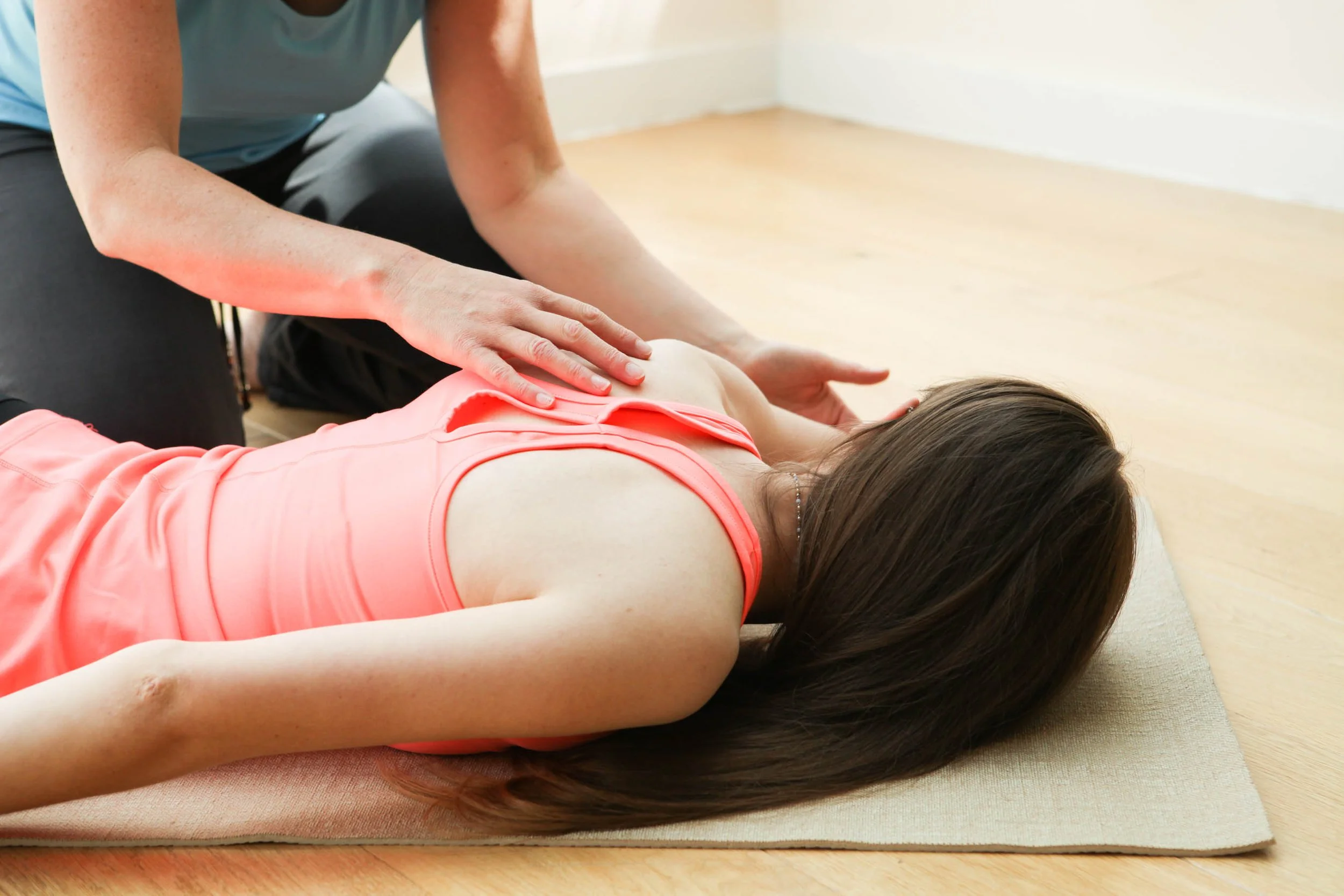
By Claudine Martin, Clinical Somatic Educator & Yoga Teacher
In early recovery, the focus is often on getting through.
Getting through urges.
Getting through difficult emotions.
Getting through the day without falling back into old patterns.
And that matters, because those skills create stability.
But at a certain point, many people notice something else:
They’re coping…
but they don’t quite feel at home in themselves.
There’s a kind of distance.
A sense of being slightly on edge.
Or slightly numb.
Or like the body is there, but not fully available.
And the question becomes:
“How do I actually live in my body now?”
When Stability Doesn’t Feel Like Ease
You can be doing well on the outside and still feel a sense of unease.
Not dramatic or overwhelming, but constant.
A tightness you can’t quite place.
A restlessness that doesn’t fully switch off.
A difficulty settling, even when things are okay.
It’s not a lack of effort.
And it’s not something you need to “push through.”
But it’s a signal that usually means something very specific:
Your body is still running patterns it learned under stress.
The Part That Often Gets Missed
When you go through stress — especially repeated or long-term stress — the body doesn’t just react in the moment, it adapts.
Muscles tighten to protect.
Breathing becomes shallow or held.
Certain movements become restricted without you realising it.
Over time, this stops feeling like a response…
and starts feeling like normal.
This is because the brain has stopped clearly sensing what the body is doing.
This is a key idea in Clinical Somatics:
the problem isn’t just tension — it’s losing awareness of the tension.
Why “Just Relax” Doesn’t Work
If you can’t fully feel what you’re holding, you can’t fully let it go.
That’s why advice like “just relax” or “take a deep breath” often falls flat.
It’s not that you’re doing it wrong.
It’s that the connection between brain and muscle has gone a bit offline.
What’s needed isn’t more effort.
It’s restoring that connection.
Reconnection Isn’t Passive
In Clinical Somatics, we don’t try to force the body to relax.
We do something more specific:
We teach the brain to feel the muscles again — and then release them from the inside.
This happens through slow, controlled movement.
Not stretching.
Not pushing.
But gently contracting and releasing muscles with full attention, so the brain can register what’s actually happening.
That’s how control returns.
What This Looks Like in Practice
The movements are simple.
But the way you do them is what matters.
For example:
You might slowly lift your shoulder,
but instead of just moving it, you track the effort.
How much are you using?
Where else in the body joins in?
What happens when you lower it slowly?
Or you gently arch your back —
then come out of it with control, noticing the difference between holding and letting go.
It’s not about doing more.
It’s about feeling more clearly.
Why This Matters in Recovery
Because when you can feel what your body is doing —
you’re no longer stuck reacting from patterns you can’t detect.
You start to notice earlier:
“I’m tightening.”
“I’m bracing.”
“I’m holding my breath.”
And that changes how you feel and respond.
It’s nothing to do with willpower — it’s the awareness that gives you options.
From Managing to Self-Trust
Over time, something shifts.
You’re not constantly trying to manage yourself.
You start to:
settle more easily after stress
recognise what’s happening before it escalates
feel more physically present
trust your responses instead of second-guessing them
You’re not trying to become perfectly calm.
You’re learning to become responsive instead of automatic.
A Different Kind of Recovery
Long-term recovery isn’t just about avoiding old behaviours.
It’s about changing your relationship with your own system.
And that includes the body.
Your body as experienced by you from within yourself — as something you can learn to sense, understand, and work with.
That’s where real stability comes from.
A Simple Way to Begin
You don’t need a long routine.
Start here:
Sit or lie down.
Bring your attention to one small movement —
maybe gently tightening your belly or lifting a shoulder.
Do it slowly.
Then release it even more slowly.
And notice:
What did you feel that you wouldn’t have noticed before?
That’s the beginning.
Not fixing or forcing anything.
Just relearning how to sense.
Where This Work Deepens
For many people, this is the point where something clicks because they’re finally paying attention in a different way.
And at the same time, it can be hard to develop this kind of practice on your own because it’s unfamiliar.
It asks for a slower pace.
A different kind of attention.
A different relationship with your body than most of us are used to.
This is where a more supported environment can make a difference. Everyone is there to slow down enough to actually feel what’s happening, and learn how to work with it.
At Beyond Recovery Retreats, this is a core part of the process. The focus is helping people move from managing their experiences… to being able to sense and respond to them in real time.